EN
EN
 RU
RU
EMULTEC | Эмульсионная установка
Эффективные решения для холодного смешивания и обработки поверхностей
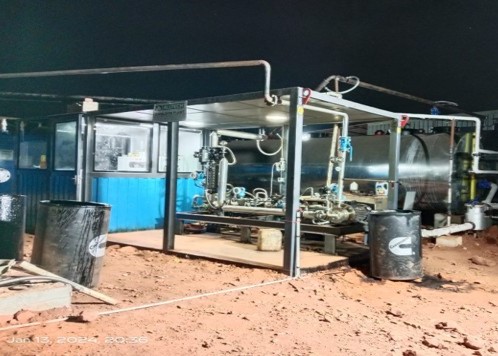
Установка для производства битумных эмульсий EMULTEC от Alltech спроектирована таким образом, чтобы обеспечить исключительную производительность и непревзойденную эффективность. Компания EMULTEC способна производить широкий спектр эмульсий, включая катионные, анионные, модифицированные, стабилизированные грунтом и с микроповерхностным покрытием, что обеспечивает точность и консистенцию. Установка является идеальным выбором для проектов по строительству и техническому обслуживанию дорог.
- Конструкция на салазках и в контейнерном исполнении: оптимизирована для удобной транспортировки и быстрой установки на любой площадке.
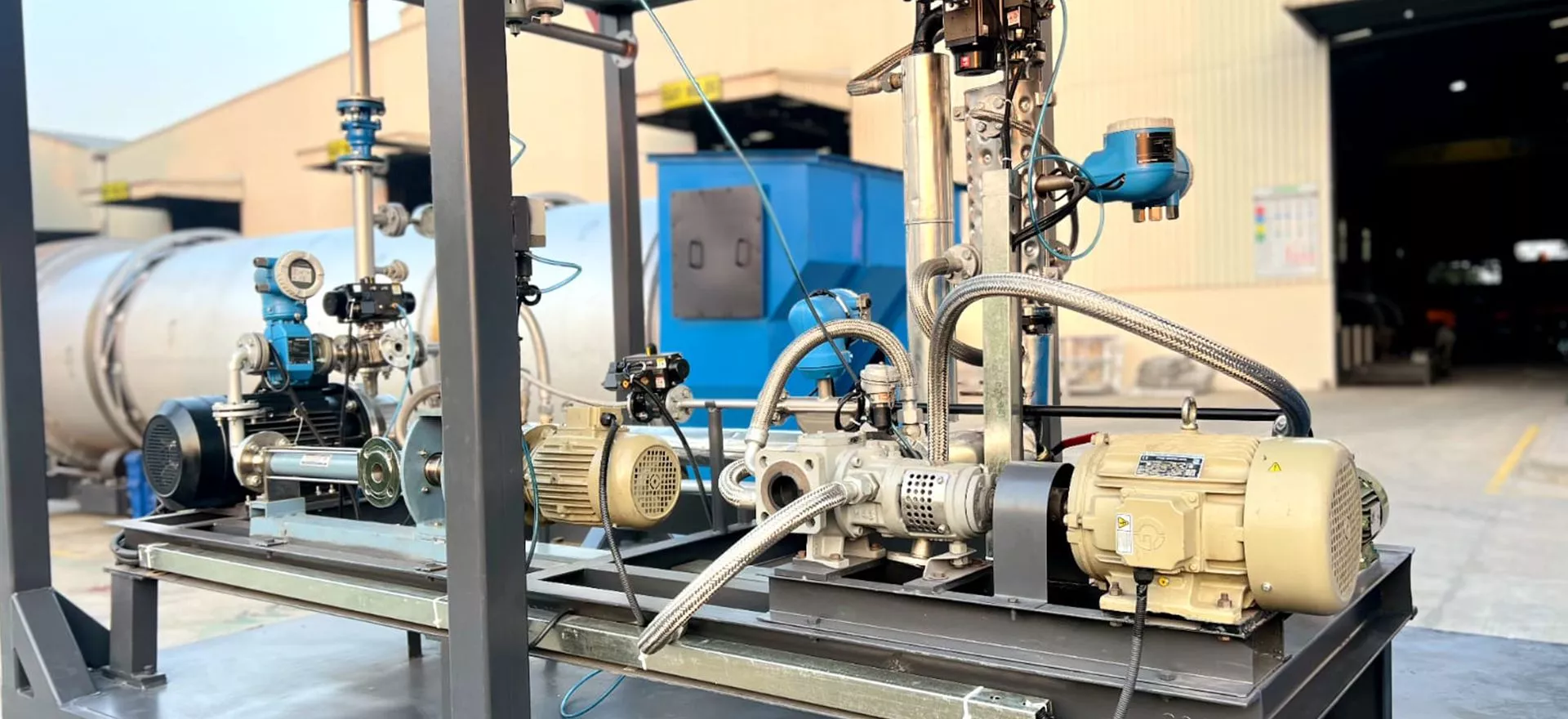
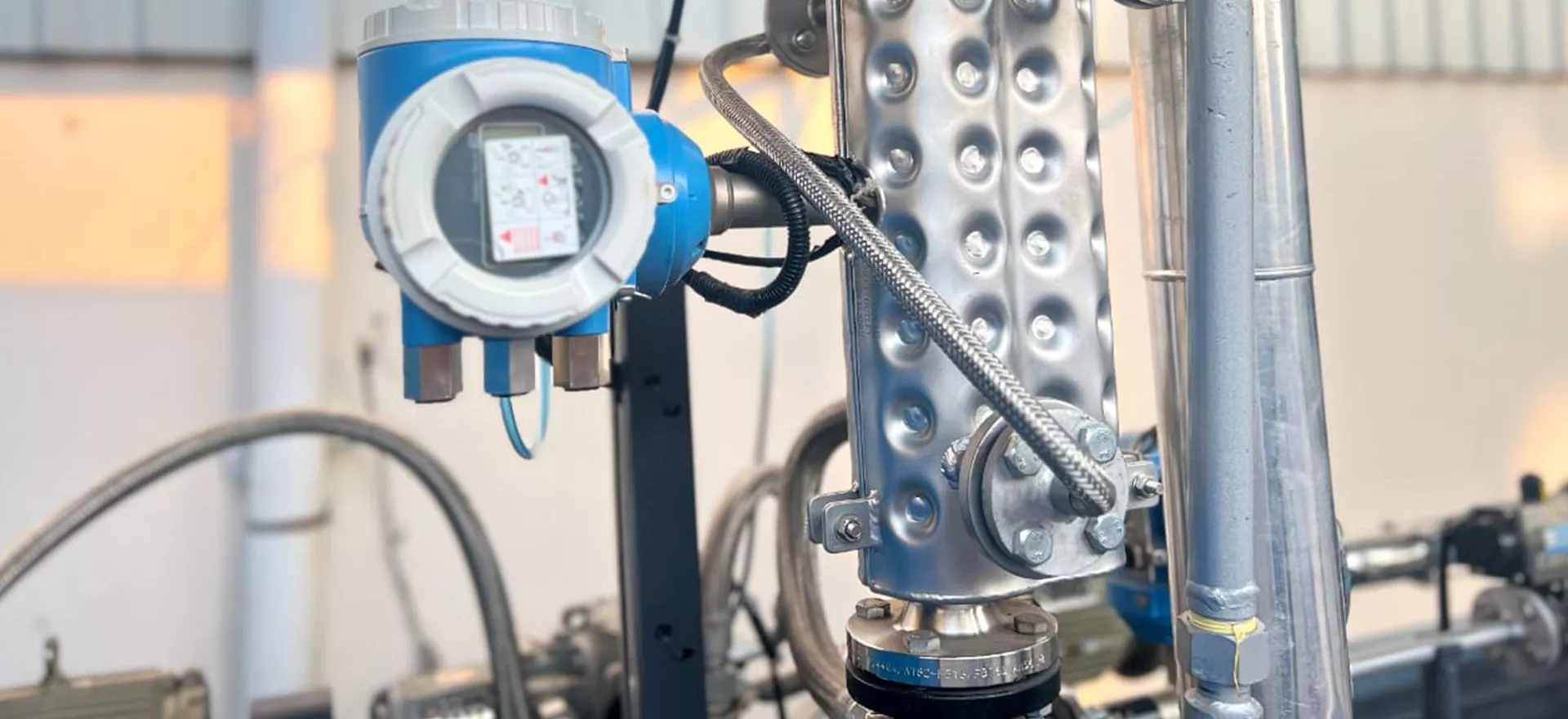
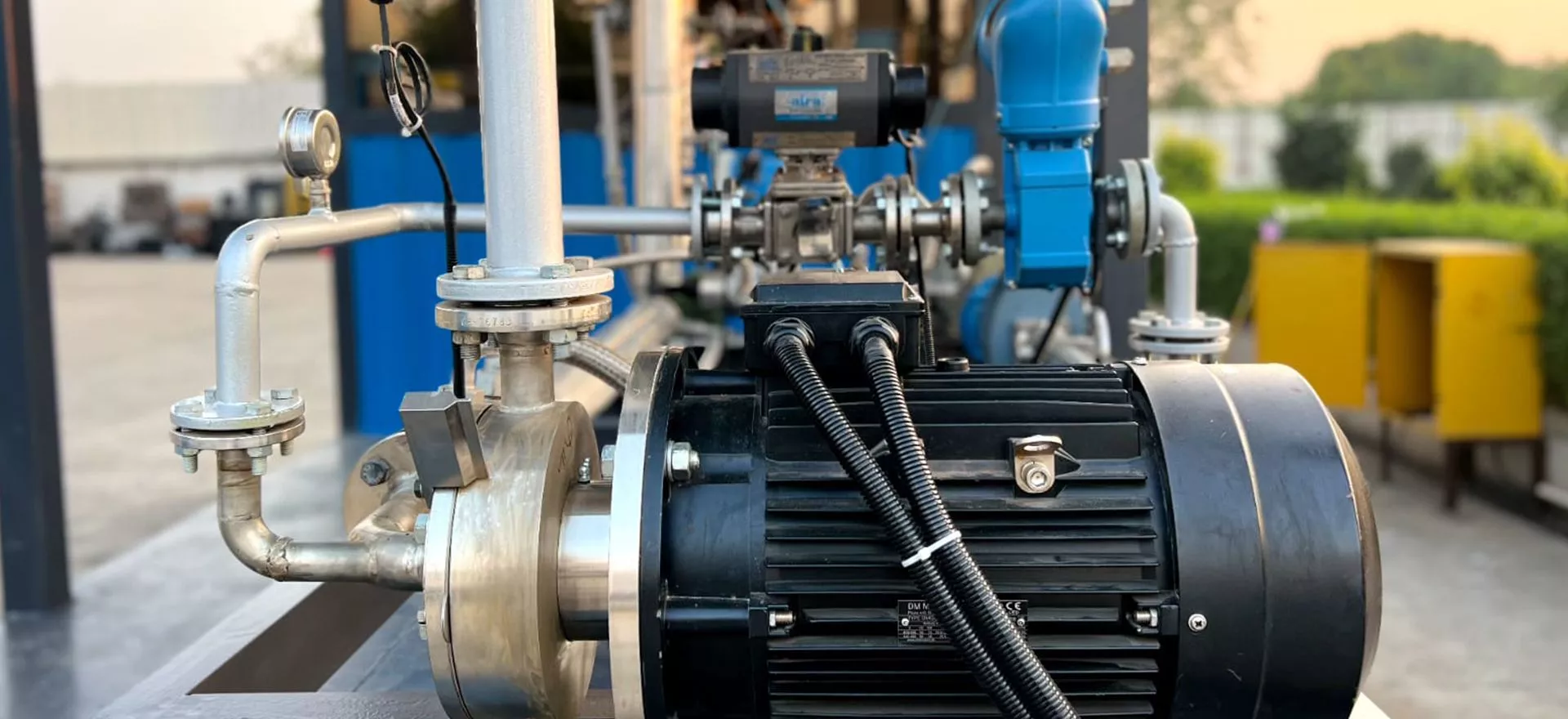
- Современные компоненты: Импортная коллоидная мельница и расходомер обеспечивают точное перемешивание и регулирование расхода.
- Требуется минимум фундамента: Сокращается объем фундаментных работ, ускоряется монтаж и сокращаются затраты.
Повышение износостойкости дорожного покрытия с помощью эмульсионного завода Alltech.
Контейнерный дизайн
Высокая рентабельность инвестиций, низкие эксплуатационные расходы.
Беспроблемное техническое обслуживание
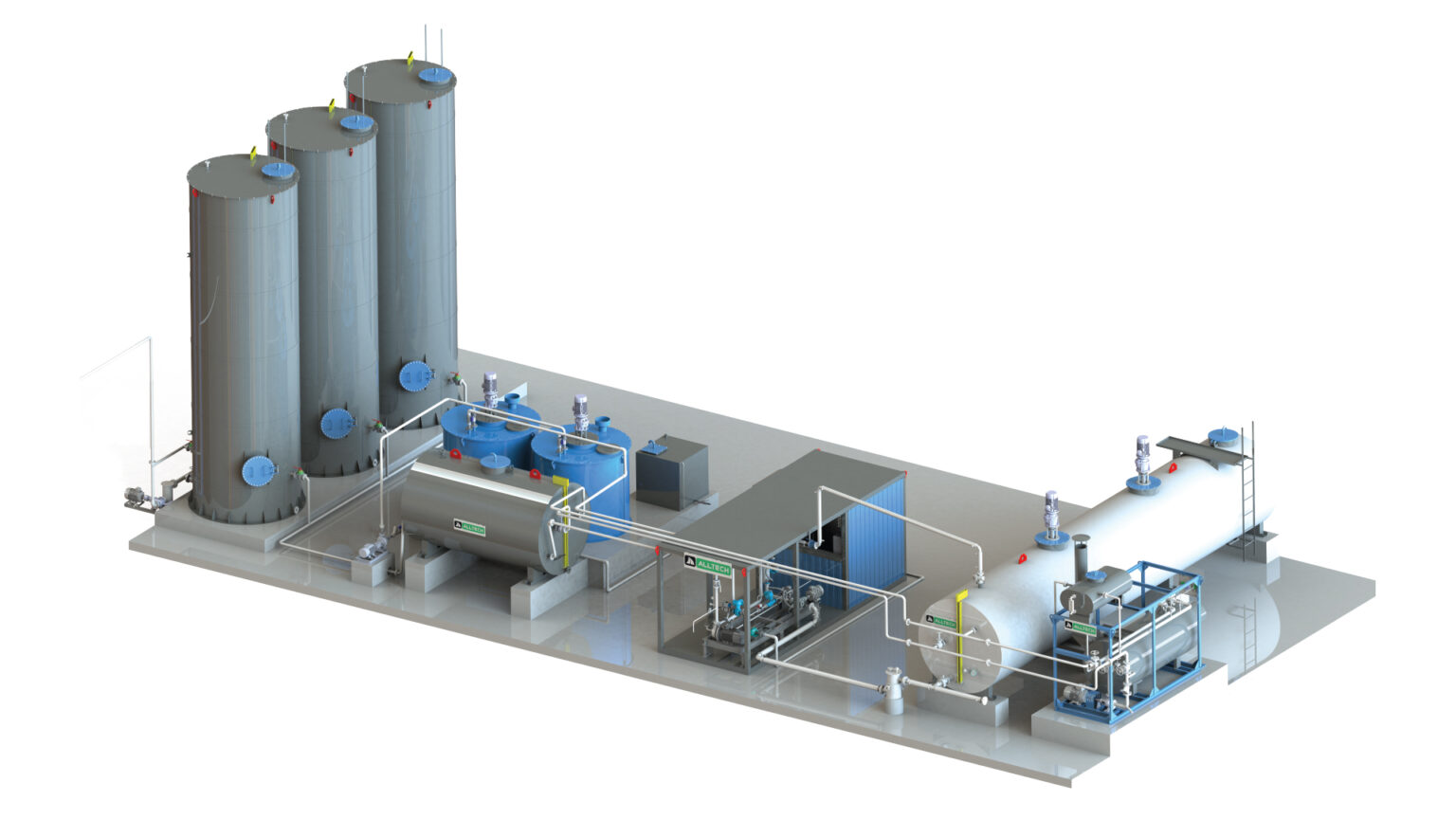
Emulsion Storage Tank
Safely stores finished emulsion at optimal temperature for dispatch.
Solvent Tank
Ensures accurate dosing and safe storage of solvents used in production and cleaning.
Loading Point
Streamlined setup for fast, spill-free loading into drums or tankers.
Water Tank
Provides consistent water supply for balanced emulsion formulation.
Chemical Tank
Safely stores emulsifiers and additives to avoid contamination.
Emulsion Plant Unit
Core unit where bitumen, water, and chemicals are mixed using a high-shear mill.
Raw Bitumen Tanks
Maintains raw bitumen at the right temperature for smooth processing.
Thermic Heater
Provides consistent heating across the plant to ensure energy efficiency.
Emulsion Storage Tank
Safely stores finished emulsion at optimal temperature for dispatch.
Solvent Tank
Ensures accurate dosing and safe storage of solvents used in production and cleaning.
Loading Point
Streamlined setup for fast, spill-free loading into drums or tankers.
Water Tank
Provides consistent water supply for balanced emulsion formulation.
Chemical Tank
Safely stores emulsifiers and additives to avoid contamination.
Emulsion Plant Unit
Core unit where bitumen, water, and chemicals are mixed using a high-shear mill.
Raw Bitumen Tanks
Maintains raw bitumen at the right temperature for smooth processing.
Thermic Heater
Provides consistent heating across the plant to ensure energy efficiency.
Технические характеристики
| Модель | Серия EMULTEC | ||
|---|---|---|---|
| Производительность установки | от 7 до 40 т/ч | ||
| Секции | |||
| Мельница | Тип | Коллоидная мельница высшего класса | |
| Расходомеры | Тип | Электромагнитный массовый расходомер | |
| Управление процессом | Тип | ПЛК - SCADA | |
| Дополнительные компоненты | |||
| Баки для мыла и растворителя | Литры | По требованию заказчика | |
| Термомасляный нагреватель (на салазках) | Типы | На жидком / твёрдом / газовом топливе | |
| Битумные баки | Типы | Система косвенного / прямого нагрева | |
| т | 30 | 50 | 75 | 100 | ||
| Бак для эмульсии | кл | 20 | 30 | 50 | |
| Водяной бак с системой подогрева | кл | 10 кл | |
оценка
| RS-1 | RS-2 | MS | SS-1 | SS-2 | Модифицированный |
|---|---|---|---|---|---|
| Сцепляющий слой | Обработка поверхности/затирка, проникающая затирка щебня | Премикс | Грунтовочный слой | Сларри-сил, сцепляющий слой | Микрообработка и полимерно-модифицированные эмульсии |
Working of Emulsion Plants
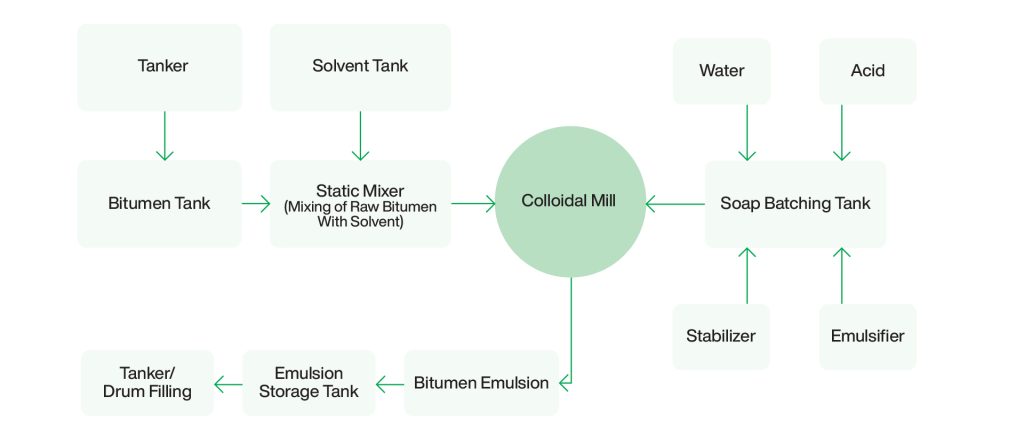
The process of emulsion production involves several steps:
Heating bitumen
Bitumen is heated to reduce its viscosity and improve its flow properties.
Emulsifying bitumen and water
Bitumen is mixed with water and emulsifying agents in the colloid mill to create a stable emulsion.
Storing and transporting emulsions
The produced emulsion is stored in tanks and transported to construction sites using specialized vehicles.
Advantages of Emulsion Plants
Emulsion plants offer numerous benefits:
Reduced heating requirements
Emulsions can be produced at lower temperatures compared to hot bitumen, resulting in energy savings, and reduced environmental impact.
Better mixing properties
Emulsions provide better coating and adhesion to aggregates, resulting in improved pavement performance.
Lower environmental impact
Emulsions emit fewer fumes and greenhouse gases during production and application, making them more environmentally friendly.
Emulsion tanks
Tanks for storing the produced emulsion.
Pumps and pipelines
Infrastructure for transporting bitumen, water, and emulsions within the plant.
Challenges in Emulsion Plant Operations
Despite their advantages, emulsion plants face certain challenges:
Handling of bitumen
Bitumen can be sticky and challenging to handle, requiring proper safety measures and equipment.
Maintenance requirements
Emulsion plants require regular maintenance to ensure smooth operation and prevent breakdowns.
Environmental concerns
Proper waste management and pollution control measures are necessary to mitigate the environmental impact of emulsion production.
Applications of Emulsions
Emulsions find widespread applications in road construction:
Surface dressing
Emulsions are used to seal and waterproof road surfaces, enhancing their durability and skid resistance.
Prime coating
Emulsions serve as a bond between the pavement and subsequent layers, ensuring proper adhesion and strength.
Cold mix asphalt
Emulsions are used to produce cold mix asphalt, which can be laid at ambient temperatures, reducing energy consumption and emissions.
Fog seal
Emulsions are sprayed over existing pavements to rejuvenate aging surfaces and seal minor cracks, extending their service life.
Key Considerations for Emulsion Plant Selection
When choosing an emulsion plant, several factors should be considered:
Production capacity
The plant should have adequate capacity to meet project requirements.
Quality control measures
Quality assurance processes should be in place to ensure the consistency and performance of emulsions.
Energy efficiency
Go for plants equipped with energy-efficient technologies to reduce operating costs and environmental impact.
Future Trends in Emulsion Plant Technology
The future of emulsion plants is characterized by innovation and sustainability:
Development of eco-friendly emulsifiers
Research is underway to develop emulsifiers with minimal environmental impact, promoting sustainability.
Automation and digitization
Emulsion plants are increasingly incorporating automation and digital technologies for enhanced efficiency and control.
How to Choose the Right Emulsion Plant
Selecting the right emulsion plant involves:
Assessing project requirements
Consider the type and scale of the project to determine the suitable plant specifications.
Consulting with experts
Seek advice from industry professionals to make informed decisions.
Evaluating costs and benefits
Compare the costs and benefits of different plant options to choose the most cost-effective solution.
Common Problems with Emulsion Plants
Some common issues encountered in emulsion plant operations include:
Emulsion settling
Improper mixing or storage conditions can lead to emulsion settling, affecting its performance.
Blockages in pipelines
Sedimentation or solidification of emulsion components can cause blockages in pipelines, disrupting production.
Equipment malfunction
Mechanical failures or wear and tear of equipment can result in downtime and production delays.
Maintenance Tips for Emulsion Plants
To ensure smooth operation and longevity of emulsion plants, follow these maintenance tips:
Regular cleaning
Clean tanks, pipelines, and equipment to prevent build-up and contamination.
Inspection of components
Regularly inspect components for signs of wear or damage and replace them as needed.
Lubrication of machinery
Safety Measures in Emulsion Plant Operations
Safety is paramount in emulsion plant operations:
Personal protective equipment (PPE)
Provide employees with appropriate PPE, including gloves, goggles, and respiratory protection.
Emergency procedures
Develop and communicate emergency procedures for handling spills, fires, and other incidents.
Training of personnel
Train employees on safe operating practices and emergency protocols to minimize risks.
Environmental Impact of Emulsion Plants
Emulsion plants can have a significant environmental footprint:
Waste management practices
Implement effective waste management strategies to minimize environmental impact.
Recycling of materials
Explore options for recycling emulsion byproducts and waste materials.
Emission reduction strategies
Invest in technologies and practices to reduce emissions and pollution from plant operations.
Your Guide to Finding the Perfect Asphalt Plant Supplier Near You
Emulsions are classified based on their breaking characteristics:
Quick break (cationic) emulsions
These emulsions break rapidly upon contact with aggregates, providing quick adhesion and curing.
Medium break (cationic) emulsions
Offering a balance between quick and slow break, these emulsions are widely used in surface treatments and tack coats.
Slow break (anionic) emulsions
These emulsions break slowly, providing prolonged workability and adhesion, making them suitable for dense-graded mixes and cold mix asphalt.
Components of Emulsion Plants
Emulsion plants consist of several key components:
Bitumen tanks
Storage tanks for storing bitumen.
Water tanks
Storage tanks for holding water, a crucial component in emulsion production.
Colloid mill
Equipment for emulsifying bitumen and water, ensuring proper mixing and stability.
Emulsion tanks
Tanks for storing the produced emulsion.
Pumps and pipelines
Infrastructure for transporting bitumen, water, and emulsions within the plant.
Conclusion
Emulsion plants are indispensable in modern road construction, offering sustainable and cost-effective solutions for pavement needs. With their versatility, efficiency, and environmental benefits, emulsions are paving the way for a greener and more resilient infrastructure. By understanding the components, working principles, and applications of emulsion plants, stakeholders can make informed decisions to optimize road construction processes.
Frequently Asked Questions
Emulsion is a colloidal suspension of bitumen in water, used as a binder in various road construction applications.
Emulsions are produced by mixing bitumen with water and emulsifying agents in colloid mills at emulsion plants.
Emulsions offer benefits such as reduced heating requirements, better mixing properties, and lower environmental impact compared to hot bitumen.
Challenges include handling of bitumen, maintenance requirements, and environmental concerns.
Emulsions are used for surface dressing, prime coating, cold mix asphalt, and fog seal.
Consider factors such as production capacity, quality control measures, and energy efficiency when selecting an emulsion plant.
Common issues include emulsion settling, blockages in pipelines, and equipment malfunction.
Regular cleaning, inspection of components, and proper lubrication of machinery are essential for maintenance.
Provide employees with appropriate PPE, establish emergency procedures, and conduct regular training on safety practices.
Implement effective waste management practices, explore recycling options, and invest in emission reduction technologies.