
 EN
EN
 RU
RU
UNIBLACK | Classic Series (80-140 TPH)
The UNIBLACK Classic Series is designed for flexibility, ease of installation, and long-term reliability. With production capacities from 80 to 140 TPH, it’s ideal for contractors seeking a compact yet powerful solution for urban and regional roadwork.
Featuring a modular layout, smooth transportation during initial setup, making it the ideal choice for contractors looking for an efficient, space-saving solution with uncompromised quality.
Salient Features
- Modular design for quick setup
- Precision batching & consistent output
- Optimized fuel consumption
- Scalable to project needs
- Minimal maintenance, maximum uptime
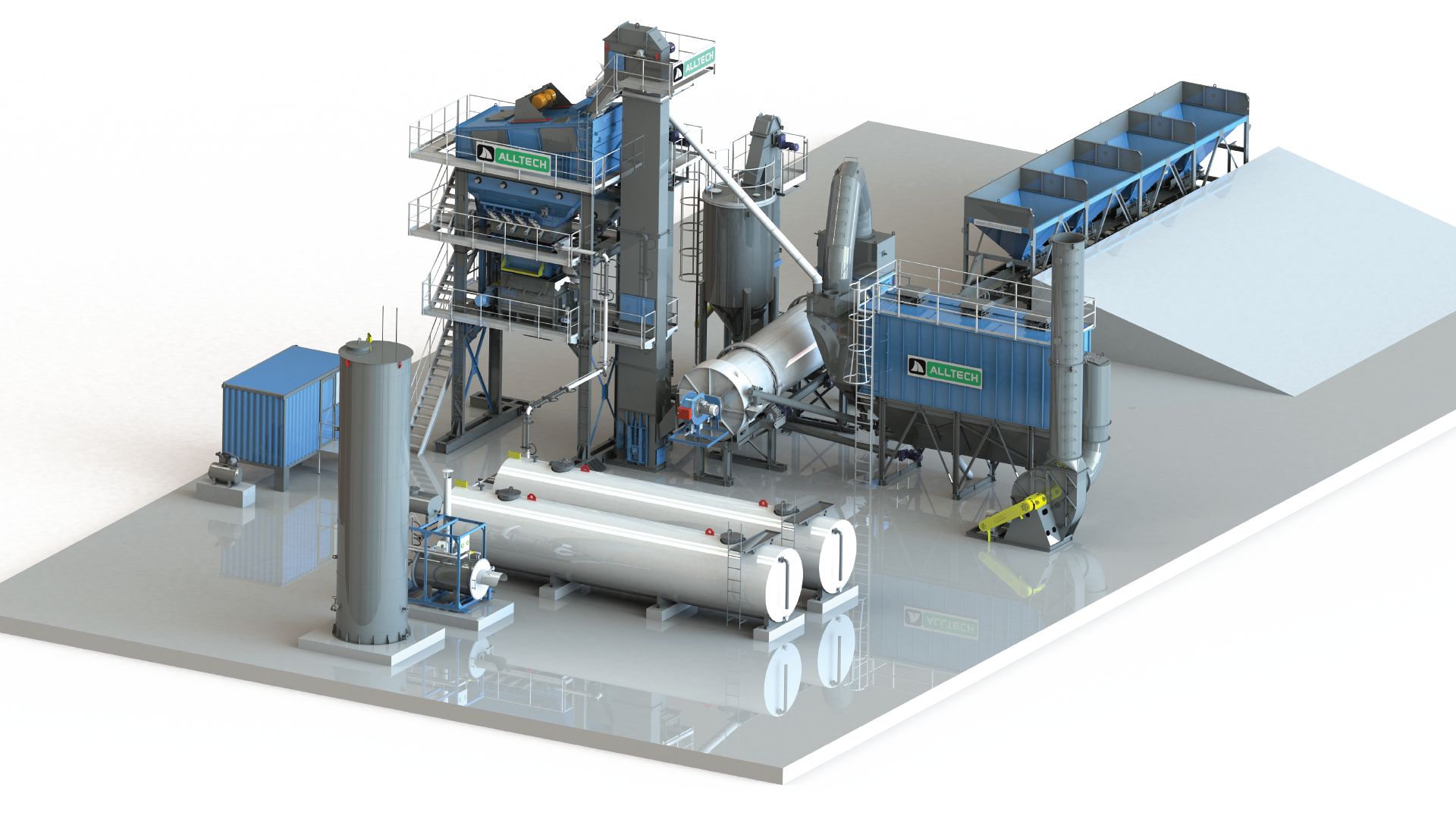
Cold Aggregate Bins
Modular bins with electrical feeder drives and high-speed conveyors ensure smooth aggregate flow, aided by dust-free rollers and a scalping screen.
Hot Elevator
Heavy-duty chain with teethed EN-19 shaft and back-stop gear motor for slip-free drive
Bitumen Tanks
Central Control Cabin
An Advanced automation system with manual/automatic control, remote access for support, real-time monitoring, and user-friendly graphics with one-click operation.
Fuel Tank
Thermic Heater
Filler Silo
Dryer Drum
The insulated drum minimizes heat loss, while special lifting flights enhance heat transfer.
Pollution Control Bag House
Pre-separator captures coarse dust, while the bag filter ensures high-efficiency fine dust filtration. Features include a VFD motor for energy savings and an emergency cold air valve for added safety.
UNIFLAME Modulating Burner
High-pressure modulating burner for efficient fuel use (diesel, LDO, or furnace oil).
Multi-Deck Vibrating Screen
Wider screening area with dual motors for increased productivity and high-stiffness springs for precise weighing.
Weighing Section
Larger weigh-bin on load cells for accuracy and hot-oil jacketed bitumen hopper to maintain temperature.
Hot Aggregate Bins
Zero-maintenance radial discharge gates with capacitance level switches to prevent overflow
Mixing Unit
Equipped with abrasion-resistant Ni-Hard steel paddles and direct shaft-mounted gear motors for efficient mixing and a leak-proof discharge gate.
Cold Aggregate Bins
Modular bins with electrical feeder drives and high-speed conveyors ensure smooth aggregate flow, aided by dust-free rollers and a scalping screen.
Hot Elevator
Heavy-duty chain with teethed EN-19 shaft and back-stop gear motor for slip-free drive
Bitumen Tanks
Central Control Cabin
An Advanced automation system with manual/automatic control, remote access for support, real-time monitoring, and user-friendly graphics with one-click operation.
Fuel Tank
Thermic Heater
Filler Silo
Dryer Drum
The insulated drum minimizes heat loss, while special lifting flights enhance heat transfer.
Pollution Control Bag House
Pre-separator captures coarse dust, while the bag filter ensures high-efficiency fine dust filtration. Features include a VFD motor for energy savings and an emergency cold air valve for added safety.
UNIFLAME Modulating Burner
High-pressure modulating burner for efficient fuel use (diesel, LDO, or furnace oil).
Multi-Deck Vibrating Screen
Wider screening area with dual motors for increased productivity and high-stiffness springs for precise weighing.
Weighing Section
Larger weigh-bin on load cells for accuracy and hot-oil jacketed bitumen hopper to maintain temperature.
Hot Aggregate Bins
Zero-maintenance radial discharge gates with capacitance level switches to prevent overflow
Mixing Unit
Equipped with abrasion-resistant Ni-Hard steel paddles and direct shaft-mounted gear motors for efficient mixing and a leak-proof discharge gate.
Technical Specification
| PLANT MODEL | UNIBLACK 1000 | UNIBLACK 1250 | UNIBLACK 1500 | UNIBLACK 1750 | |
| Plant Output @ 3% moisture content (t/h) | 80 | 100 | 120 | 140 | |
| Batch Size @ Cycle time 45 Sec. (kg) | 1000 | 1250 | 1500 | 1750 | |
| Cold Bin Aggregate Feeders | No. of Bins | 4 | 4 | 4 | 4 |
| Individual Bin Capacity (M3) | 7 | 7 | 7.5 | 7.5 | |
| Charging Conveyors | Unit Output Capacity (t/h) | 100 | 120 | 140 | 160 |
| Dryer Drum | Drive Type | 4W Friction Drive | |||
| UNIFLAME Modulating Burner Coal Fired Burner (Optional) | Type | UNIFLAME Modulating Burner | |||
| Fuel Options |
Liquid: LDO/FO/Diesel Gas: LPG/PNG/CNG Solid Fuel: Coal | ||||
| Heat Output (MW/Hr.) | 10 | 10 | 12 | 12 | |
| Pollution Control Unit | Primary (Air Flow) | Cascade Type Pre-Separator | |||
| Secondary (Air Flow) | Bag-House Filter | ||||
| Hot Elevator | Max. Capacity (t/h) | 100 | 120 | 140 | 160 |
| Screen Unit | Fraction of Screens | 4 | 4 | 4 | 4 |
| Screen Mesh | As per Requirements | ||||
| Hot Aggregate Bins | Nos. of Bins | 4 | 4 | 4 | 4 |
| Mixer Unit | Type | Twin Shaft Direct Driven Synchronized Mixer | |||
| Control Panel | Type | PLC Based, Fully Computerised with Manual Over Ride | |||


Your Guide to Finding the Perfect Asphalt Plant Supplier Near You
In this guide, we’ll delve deeper into the world of asphalt equipment with a special focus on finding asphalt products that will meet your needs. Whether you need an 80 – 140 tph asphalt plant or any other capacity, we will guide you step by step through the process, from identifying the problem to providing a solution, providing you with important questions that will make your decision easier.
Introduction
When it comes to asphalt production, choosing the right supplier is critical to the success of the project. This section will explain why choosing the perfect asphalt material should be so important.
Why Choosing the Right Asphalt Plant Supplier Maters
The quality of your asphalt production largely depends on the products you use. An experienced and reputable supplier can make all the difference in achieving consistent results. This guide will help you navigate the process of finding the Alltech make asphalt plant to meet your specific requirements.
Supplier’s Track Record
Research the supplier’s history. Have they consistently delivered on their promises? Reading customer reviews and asking for recommendations can provide valuable insights.
Why Choosing the Right Asphalt Plant Supplier Matters
Why Choosing the Right Asphalt Plant Supplier Matters
The quality of your asphalt production largely depends on the products you use. An experienced and reputable supplier can make all the difference in achieving consistent results. This guide will help you navigate the process of finding the ideal asphalt plant supplier to meet your specific requirements.
Supplier’s Track Record
Research the Alltech’s 80 – 140 tph asphalt plants history. Have they consistently delivered on their promises? Reading customer reviews and asking for recommendations can provide valuable insights.
Permits and Regulations
Understand the permits and regulations applicable to asphalt production in your region. Your supplier should be well-versed in these requirements.
Understanding Your Asphalt Needs
Before you start your search for an asphalt plant supplier, it’s essential to have a clear understanding of your production needs and the types of asphalt plants available.
Assessing Your Production Requirements
Begin by determining the volume of asphalt you need to produce regularly. This will help you identify the capacity requirements for your asphalt plant, whether it’s 80-140 tph or a different capacity.
Types of Asphalt Plants
There are various types of asphalt plants, including batch plants, drum mix plants, and continuous mix plants. Each has its advantages and is suitable for specific applications. Understanding these options is crucial in making the right choice.
Researching Asphalt Plant Suppliers
Now that you know your asphalt production needs, it’s time to start your search for the right supplier.
The Importance of Asphalt Plant Supplier Reputation
Reputation matters in the world of asphalt plants. Look for suppliers with a proven track record of delivering high-quality equipment and excellent service.
Locating Hot Mix Asphalt Plant Near You
Consider the distance of the supplier’s factory to your project site. Locating a hot mix asphalt production facility near you can save you time and transportation costs.
Over View
Evaluating Equipment Quality
The quality of the asphalt plant equipment is a critical factor in your decision-making process.
The Key Components of an Asphalt Plant
Understand the essential components of an asphalt plant, such as the dryer, mixer, and silos. A well-designed plant will ensure efficiency and reliability.
Quality Standards and Certifications
Check whether the seller’s products meet industry standards and have relevant certifications. This ensures that your facility complies with environmental and safety regulations.
Budget Considerations
It is important to balance your budget when choosing an asphalt plant.
Initial Costs vs. Long-term Savings
When considering the long-term savings of a good factory, upfront costs are quite high. A reliable facility like Alltech can reduce maintenance costs and repair time.
Financing Options
Explore financing options to make your investment more manageable. Many suppliers offer financing plans or leasing arrangements.
Environmental and Regulatory Compliance
Adhering to environmental and regulatory standards is essential in today’s asphalt industry.
Meeting Emission Standards
Ensure that the plant you choose meets emissions regulations in your area. Environmentally friendly practices are not only responsible but can also lead to cost savings.
Maintenance and Support
Ongoing support is crucial for the smooth operation of your asphalt plant.
Availability of Spare Parts
Ask about availability and how quickly it can be shipped. Downtime can be costly, so product reliability is important.
Technical Support and Training
Ask about the technical support and training options you can receive by your supplier. Proper training ensures that your team can operate the plant effectively.
Customer Feedback and Testimonials
Learn from the experiences of others who have worked with the supplier.
Learning from Others’ Experiences
Read customer feedback and testimonials to gain insights into the supplier’s performance. This can help you make an informed decision.
Making Your Decision
After thorough research and consideration, it’s time to make your decision for 80 – 140 tph asphalt plants.
Creating a Shortlist
Narrow down your options to a shortlist of suppliers that meet your criteria. Compare their offers and weigh the pros and cons.
Conclusion
Selecting the right supplier for 80 – 140 tph asphalt plants is a critical step in ensuring the success of your asphalt production. With the knowledge and insights gained from this guide, you’re well-equipped to make an informed decision and embark on your road to reliable asphalt production.
Frequently Asked Questions
The price of an asphalt batch mix plant in India typically starts from ₹1.55 Cr for an 100 TPH plant and goes up based on capacity, fuel system, and optional features. Alltech’s UNIBLACK Classic series (80–140 TPH) offers four models — UNIBLACK 1000, 1250, 1500, and 1750 — with pricing customized to your project needs. Contact us at +91 89800 05313 or info@alltech-group.com for a detailed quote.
An asphalt batch mix plant produces asphalt in precisely weighed batches with a twin-shaft paddle mixer, giving superior mix accuracy and the ability to change recipes between batches. A drum mix plant produces asphalt continuously inside a rotating drum — simpler and lower cost, but with less control over mix quality. Batch mix plants are required by specification for highways, expressways, and airport runways in most countries. Drum mix plants suit lower-volume or rural road projects where strict mix standards are not mandatory.
Modern asphalt batch mix plants support multiple fuel types through a modulating burner system. The Alltech UNIBLACK Classic supports liquid fuels (Diesel, LDO, Furnace Oil), gas fuels (LPG, PNG, CNG), and solid fuel (Coal) via an optional coal-fired burner. Multi-fuel support allows contractors to switch fuels based on local availability and price, significantly reducing operating costs over the plant’s lifetime.
Yes. An asphalt batch mix plant can be equipped with a RAP (Reclaimed Asphalt Pavement) system that incorporates up to 30% recycled asphalt into the fresh mix. Alltech has successfully delivered multiple UNIBLACK plants with RAP integration, helping contractors reduce raw material costs and meet green infrastructure compliance requirements. Contact us to add a RAP system to your plant configuration.
Installation time for an asphalt batch mix plant typically ranges from 4 to 8 weeks, depending on site readiness, civil foundation completion, and model capacity. The Alltech UNIBLACK Classic’s modular structure and pre-wired connections reduce on-site assembly time significantly compared to conventional plants. Alltech provides a complete installation team, commissioning engineers, and operator training as part of every delivery.
An asphalt batch mix plant requires a two-stage dust collection system to meet environmental standards: a primary pre-separator (cyclone or cascade type) to capture coarse dust from the dryer exhaust, and a secondary bag-house filter for fine particle filtration. The UNIBLACK Classic’s pollution control unit includes a VFD motor for energy savings and an emergency cold air valve, ensuring compliance with CPCB emission norms in India and international environmental standards.
India’s top asphalt batch mix plant manufacturers are located in Mehsana and Ahmedabad, Gujarat — the hub of road construction equipment manufacturing in the country. Alltech India Limited, established in 2007, began as a contract manufacturer for a leading European brand and brings that international engineering experience to every UNIBLACK Classic plant. Key factors to evaluate: manufacturing experience, after-sales support, spare parts availability, export track record, and automation quality. Alltech is a verified exporter supplying plants to Asia, Africa, and Australia.
Yes. India is one of the world’s leading exporters of asphalt batch mix plants, offering high-quality equipment at competitive prices. Alltech India Limited exports the UNIBLACK Classic to countries including Nepal, Bangladesh, South Africa, Algeria, Thailand, and more. Alltech also has a dedicated subsidiary — Alltech Australasia Pty Ltd — for the Australian market. Our export team handles full documentation, logistics, and international after-sales support. Email info@alltech-group.com for international inquiries.
A well-maintained asphalt batch mix plant can last 20 to 30 years or more. The lifespan depends heavily on component quality, operating conditions, and the maintenance discipline of the plant team. The Alltech UNIBLACK Classic uses Ni-Hard steel mixer paddles, an EN-19 shaft hot elevator, high-grade bearings, and premium structural steel — all designed for extended service life in demanding Indian and international operating conditions.
The lead time for installing a new asphalt plant can vary depending on factors such as plant type, size, and customization. It typically ranges from a few months to over a year. Factors such as permitting, site preparation, and equipment availability can affect the installation timeline. It’s essential to plan well in advance to meet project deadlines.


